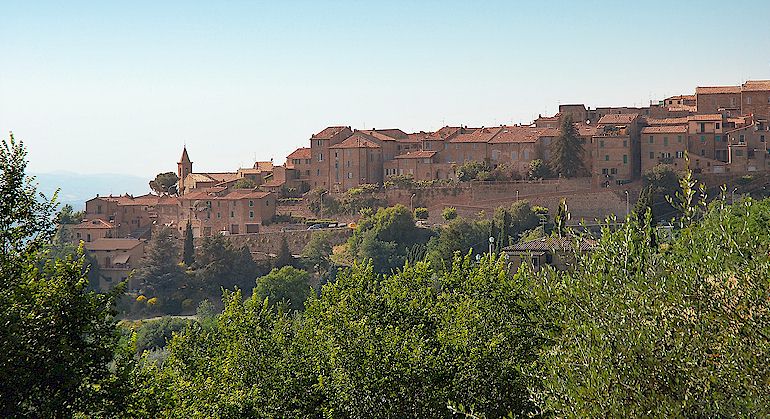
Città della Pieve |
|
|
|
Città della Pieve
|
During
Etruscan
times,
this territory in
Umbria
was under the sway of the important Etruscan town of Chiusi. The
Città della Pieve of today originated in the early Middle Ages around a
parish church (a "Pieve"), dedicated to Saints Gervasio and Protasio, and named Castrum Plebis.
The establishment of the town was completed in 1326 with the building of a fortress by the
Perugians, who, after the death of Emperor Frederick II in 1250,
controlled Città della Pieve until 1529, when Pope Clement VII de' Medici brought the town under the central dominion of the Church.
The most important buildings were erected between the 13 C and
16 C, and bricks were used in their construction, since Città della Pieve had been a major
centre of brick production for Tuscany and Umbria since the Middle Ages.
Il Perugino "The Adoration of the Magi" (1504) The story is depicted as a big knightly procession lost in the vastness of one of the largest landscapes created by Perugino. Here is a recognisable, though idealised, the view from Città della Pieve toward Lake Trasimeno and the Valdichiana. |
Palio dei Terzieri at Città della Pieve
From 10th August to the
second-to-last Sunday of the month
|
Val di Chiana © ammonet InfoTech 2008 - 2020. All rights reserved.
)
)
)